A practical, science-backed guide for real people living with CKD
Living with chronic kidney disease (CKD) means suddenly having to think about things you may never have heard of before: GFR, creatinine, potassium, and… phosphorus.
For many kidney warriors, phosphorus is one of the most confusing parts of the kidney diet. You might be told to “watch your phosphorus,” “limit dairy,” or “take your binders,” but not really understand why.
This guide is here to change that.
You’ll learn, in clear language:
What phosphorus actually is and why your body needs it
What happens when you have CKD or dialysis and phosphorus builds up
The difference between natural phosphorus and phosphorus additives
How to spot “hidden phosphorus” on food labels
How diet, dialysis, and medicines like phosphate binders work together
Practical, realistic tips you can start using today
*BONUS: Top 5 Foods to Avoid
Important: This article is for general education only and is not personal medical advice. Always follow the guidance of your nephrologist, renal dietitian, and healthcare team.
1. What Is Phosphorus, Really?
Phosphorus is a mineral your body needs to work properly. It teams up with calcium to build strong bones and teeth, but it also:
Helps your body make and store energy
Supports your muscles and nerves
Plays a role in how your cells grow and repair
So phosphorus itself is not the enemy. Your body actually needs a steady supply — just not too much.
In healthy people, the kidneys help control phosphorus levels. They filter extra phosphorus out of the blood and get rid of it in the urine.
But with chronic kidney disease, your kidneys can’t do this job as well. As kidney function goes down, phosphorus can start to build up in your blood, even if you feel okay.
2. Why High Phosphorus Is a Problem in CKD
High blood phosphorus is called hyperphosphatemia. You usually can’t feel it. You might feel completely normal while your labs are going in the wrong direction.
So why do your kidney team and dietitian care so much about it?
2.1. Bone and Mineral Problems
Your body likes to keep calcium and phosphorus in balance. When phosphorus is high, your body tries to fix it by:
Pulling calcium from your bones, which can make them weaker
Releasing more parathyroid hormone (PTH), a hormone that controls calcium and phosphorus
Over time, this can lead to bone disease in CKD, sometimes called:
Renal osteodystrophy
Chronic kidney disease–mineral and bone disorder (CKD-MBD)
This may increase the risk of:
Bone pain
Bone fractures
Weak or brittle bones
2.2. Blood Vessels and Heart Health
High phosphorus can also combine with calcium and deposit in places you don’t want it, like:
Blood vessel walls
Heart valves
Soft tissues
This process is called vascular calcification, and it can make blood vessels stiffer and less flexible. That may raise the risk of:
Heart disease
Stroke
Other circulation problems
Several studies have linked higher phosphorus levels to worse outcomes in CKD and end-stage kidney disease (ESKD), including higher risk of death, especially from cardiovascular causes.[¹][²]
2.3. Other Symptoms
Not everyone feels symptoms from high phosphorus, but some people with CKD or on dialysis report:
Itching (especially when advanced)
Bone or joint pain
Feeling more tired or unwell
Again, you can’t rely on how you feel alone. That’s why regular lab tests are so important.
3. Phosphorus Blood Test: What Are “Normal” Levels?
Each lab may have slightly different “normal” ranges, but for adults, serum phosphorus is often considered normal around:
2.5–4.5 mg/dL (0.81–1.45 mmol/L)
However, your target range may be different depending on:
Your stage of CKD
Whether you’re on dialysis
Your calcium and PTH levels
Your overall medical situation
Your nephrologist and renal dietitian will look at these numbers together, not just phosphorus by itself, to guide your treatment plan.
Tip: Ask your provider: “What is my phosphorus goal, and how often will we check it?”
4. Where Phosphorus Comes From: Food & More
Phosphorus mainly comes from:
The foods you eat
Additives added during food processing
Sometimes medications, supplements, or drinks
Understanding the source of your phosphorus matters because your body absorbs different types of phosphorus more or less easily.
5. Natural vs Added Phosphorus: Why It Matters
All phosphorus is not created equal.
5.1. Naturally Occurring Phosphorus
This is the phosphorus that is naturally present in whole foods, such as:
Dairy: cheese, milk, yogurt
Meat, poultry, fish
Eggs
Nuts and seeds
Beans and lentils
Whole grains, bran cereals
Your body usually absorbs about:
40–60% of phosphorus from animal foods (like meat and dairy)
Less, often around 20–40%, from plant foods (like beans and whole grains), because it’s bound in a compound called phytate (phytic acid) that humans don’t digest well[³]
This is one reason some kidney guidelines now allow careful use of plant-based foods in CKD, tailored to your labs and stage.
5.2. Phosphorus Additives (The Sneaky Kind)
Phosphorus additives are man-made forms of phosphorus added to foods to:
Improve texture
Keep foods moist
Preserve shelf life
Enhance flavor
You’ll find them in many highly processed foods, such as:
Fast food and fried foods
Deli meats and processed meats (hot dogs, sausages, bacon)
Processed cheese slices and cheese spreads
Dark colas and some flavored drinks
Packaged baked goods (cakes, muffins, biscuits)
Some frozen meals and breaded products
Instant puddings and drink mixes
Your body can absorb up to 90–100% of phosphorus additives[³][⁴]. That means they can push your blood phosphorus up much more than the same amount of natural phosphorus.
This is why many nephrologists and dietitians now focus strongly on cutting back phosphorus additives, not just counting phosphorus grams.
6. How to Spot Hidden Phosphorus on Food Labels
The good news: phosphorus additives are usually listed in the ingredients.
The bad news: you have to know what to look for.
6.1. The “PHOS Trick”
Scan the ingredient list for the letters:
P – H – O – S
If you see “phos” in a word, there’s a good chance it’s a phosphorus additive. Examples include:
Calcium phosphate
Disodium phosphate
Phosphoric acid
Sodium acid pyrophosphate
Hexametaphosphate
Trisodium phosphate
If a food has one or more of these, it may be best to:
Limit how often you eat it
Choose a similar product without phosphorus additives
Or enjoy a smaller portion, depending on your plan
Practical habit: Each week, choose just 1–2 products in your fridge or pantry, and check the label for “PHOS.” Small steps add up.
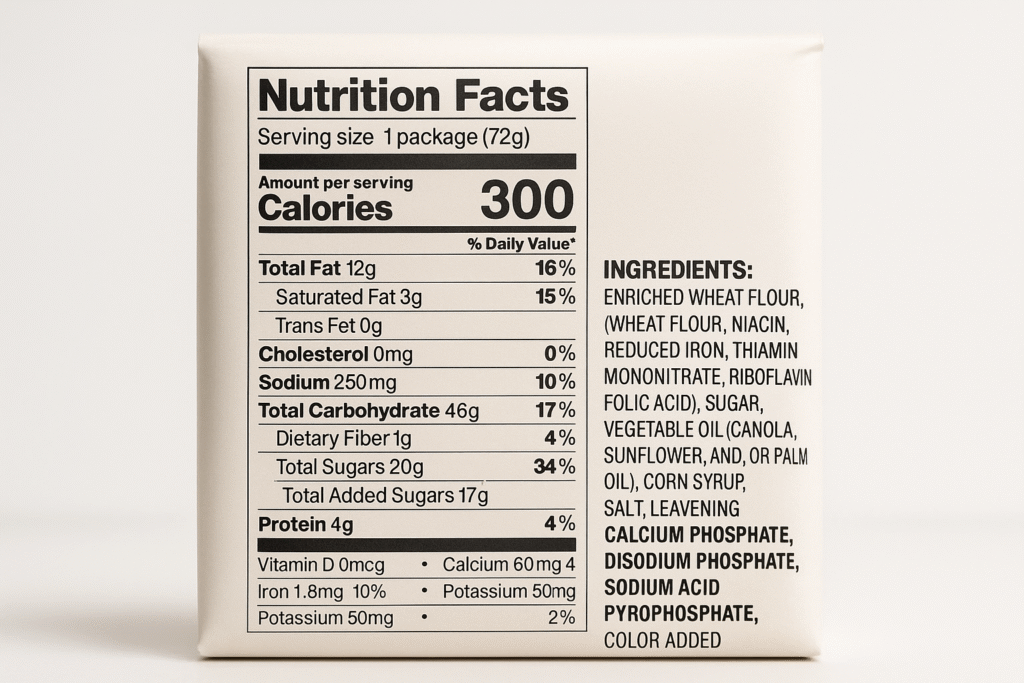
Example of Sneaky “PHOS” – Can you find them?
That’s right: “Calcium PHOSphate, Disodium PHOSphate and Sodium Acid PyroPHOSphate are all added PHOS!
7. Common High-Phosphorus Foods (and What You Can Do)
Your exact limits will depend on your labs, CKD stage, and treatment plan. But here are some common high-phosphorus foods kidney warriors are often asked to watch:
7.1. Animal-Based Foods
Cheese (especially processed cheese)
Milk and yogurt
Ice cream
Organ meats (liver, kidney)
Processed meats (hot dogs, sausages, deli meat)
Some fish and shellfish
You may not need to completely avoid these, but many people are advised to:
Limit portion sizes
Avoid products with added phosphates
Spread servings throughout the week
7.2. Plant-Based Foods
Nuts and seeds
Nut butters (peanut butter, almond butter)
Beans and lentils
Bran cereals
Whole grain breads and brown rice
Because plant phosphorus is absorbed less efficiently, some of these foods may still fit in your diet — especially in earlier stages of CKD — but this should be guided by your renal dietitian.
7.3. Processed and Packaged Foods
These are often the biggest contributors of phosphorus additives:
Fast food burgers, fried chicken, breaded fish
Pre-seasoned or injected meats
Boxed or frozen dinners
Processed cheese slices, cheese spreads
Canned or boxed baked goods, pancakes, biscuit mixes
Dark cola and some flavored sodas
Small but powerful change: Swapping out just a few processed, PHOS-heavy items for less processed options can significantly lower your phosphorus intake.
8. Phosphorus & Dialysis: What You Need to Know
If you’re on dialysis, phosphorus becomes even more important.
Dialysis helps remove waste and extra fluid, but it does not remove phosphorus as efficiently as healthy kidneys do. This is true for:
Hemodialysis (HD)
Peritoneal dialysis (PD)
8.1. Why Phosphorus Is Hard to Control on Dialysis
You’re eating several times a day, but dialysis is usually done a few times per week (for HD) or is less efficient per hour (for PD).
Many dialysis patients need more protein to stay healthy, but protein foods often contain phosphorus.
Phosphorus moves slowly from inside your cells into your blood, so even a long dialysis session may not clear as much as needed.
As a result, many people on dialysis struggle with high phosphorus levels, even when they’re trying hard.
8.2. The “Triangle” of Phosphorus Management on Dialysis
Think of phosphorus control as a triangle:
Diet – Choosing foods that are lower in phosphorus and avoiding additives where possible
Dialysis – Getting enough treatment time and following the prescribed schedule
Phosphate binders – Taking them exactly as directed, with meals/snacks
If any corner of the triangle is off — for example, frequent missed treatments, binders not taken consistently, or lots of phosphorus additives — your phosphorus can creep up.
8.3. Special Considerations on Dialysis
Your dialysis team and dietitian may:
Set a stricter phosphorus goal
Encourage high-quality protein (to prevent muscle loss) but guide you toward lower-phosphorus options and better portion control
Adjust or change your phosphate binder type or dose based on your labs
Talk with you about dialysis adequacy (how effective your treatment is)
Tip: Ask at your next dialysis visit: “How are my phosphorus levels trending over time? What’s one change we can try to help bring them closer to goal?”
9. Phosphate Binders: What They Do & How to Take Them
Phosphate binders are medications that “grab onto” some of the phosphorus in the food you eat inside your gut, so that less of it gets absorbed into your bloodstream.
They don’t remove phosphorus that’s already in your blood; that’s where dialysis and your own kidneys (if still working) come in.
Other conditions like heart disease, high calcium, or anemia
How you tolerate the medicine
9.2. How to Take Binders Properly
For most binders to work well, you need to:
Take them with meals and snacks that contain phosphorus
Follow the exact dose and timing your nephrologist prescribes
Avoid skipping binders on “cheat meals” — those may have the most phosphorus
If you regularly:
Take them too early or after a meal
Forget them
Change your dose on your own
…they won’t work as well, and your phosphorus may stay high despite your efforts.
Talk to your team if you:
Have side effects like constipation, nausea, or upset stomach
Struggle with taking multiple pills every day
Can’t afford your medications
Sometimes there are alternative options or strategies that can help.
10. Putting It All Together: Practical Strategies for Everyday Life
You don’t have to overhaul your entire life overnight. These are small, realistic steps many kidney warriors find helpful (always check with your dietitian):
10.1. Focus on “Fresh or Less Processed” More Often
When you can, choose:
Fresh or frozen (unbreaded) meats instead of pre-marinated or processed meats
Home-cooked meals instead of frequent fast food
Plain rice, pasta, and potatoes instead of boxed “instant” mixes with sauces
Fresh or frozen vegetables instead of heavily sauced or seasoned packaged ones
10.2. Use the “PHOS Trick” at the Store
Start with 1–2 foods you buy often (like your usual deli meat or favorite soda)
Check the ingredient list for “phos”
Experiment with a product that has no phosphorus additives
You might be surprised that some store brands or “simpler” products have fewer additives.
10.3. Work With Your Renal Dietitian
Your dietitian can help you:
Balance protein needs with phosphorus control (especially on dialysis)
Fit in favorite foods in safe portions or less frequent servings
Adjust your diet based on other labs (like potassium, sodium, and fluid)
Plan simple meals and snacks that don’t feel like punishment
If you don’t understand a recommendation, ask:
“Can you explain why you’re asking me to cut back on this food?” “What are 2–3 realistic swaps I can actually stick with?”
11. Mental Health & Mindset: You’re Not Failing
It’s easy to feel frustrated or guilty if your phosphorus stays high, even when you’re trying hard. But remember:
Phosphorus is tricky to manage, especially on dialysis
Many factors are involved — it’s not just about “willpower”
You are not a failure if your labs aren’t perfect
Think in terms of progress, not perfection. Celebrate small wins:
Swapping one dark cola for water or a clear drink
Catching yourself reading labels a little more often
Taking your binders more consistently this month than last
These steps matter, even if they don’t show up right away.
12. Key Takeaways: The Truth About Phosphorus & Kidney Disease
Phosphorus is essential, but too much can harm bones, blood vessels, and heart health in CKD.
High phosphorus often causes no obvious symptoms, so lab tests are crucial.
Phosphorus additives (with “phos” in the name) are absorbed more easily and can be a major source of high phosphorus.
Dialysis helps, but it does not remove phosphorus as well as healthy kidneys, so diet and binders are still important.
Phosphate binders can greatly help, but only if taken correctly and consistently with meals and snacks.
Small, realistic changes — reading labels, choosing fewer processed foods, working with your renal dietitian — can make a meaningful difference over time.
You deserve clear information and compassionate support on your kidney journey. Phosphorus doesn’t have to be a mystery, and you don’t have to manage it alone.
BONUS:
🚫 Top 5 Worst High-Phosphorus Additive Foods to Avoid
1. Processed / Packaged Meats
Examples: deli meats, bacon, sausages, fast-food chicken, rotisserie chicken (often injected). Additives to look for: phosphoric acid, sodium phosphate, pyrophosphate. 👉 These can easily double or triple the phosphorus content.
2. Cola & Dark Soft Drinks
Especially dark sodas like Coke, Pepsi, Dr. Pepper, some flavored iced teas. Additive: phosphoric acid. 👉 One 12 oz soda can have more absorbed phosphorus than an entire meal.
3. Processed Cheeses & Cheese Spreads
Examples: American cheese slices, cheese dips, Velveeta, powdered cheese products. Additives: sodium phosphate, calcium phosphate. 👉 These are far worse than natural cheeses because of added phosphates.
4. Packaged Baked Goods & Instant Mixes
Examples: boxed cakes, muffins, pancakes, biscuits, frozen breakfast sandwiches. Additives: monocalcium phosphate, dicalcium phosphate, sodium acid pyrophosphate. 👉 Very common in anything needing a “rise” or long shelf-life.
5. Convenience Foods / Frozen Meals
Examples: microwave dinners, frozen mac & cheese, frozen breaded chicken, instant noodles. Additives: phosphate blends added for texture, moisture, and shelf-life. 👉 Frozen or boxed meals often contain multiple phosphorus additives.
References
Kestenbaum B, et al. “Serum phosphate levels and mortality risk among people with chronic kidney disease.” J Am Soc Nephrol. 2005;16(2):520–528.
Palmer SC, et al. “Association of phosphate and mortality in chronic kidney disease and dialysis: a systematic review and meta-analysis.” Am J Kidney Dis. 2011;57(6):899–907.
Moe SM, Zidehsarai MP, et al. “Vegetarian compared with meat dietary protein source and phosphorus homeostasis in chronic kidney disease.” Clin J Am Soc Nephrol. 2011;6(2):257–264.
Uribarri J. “Phosphorus additives in food and their effect in dialysis patients.” Clin J Am Soc Nephrol. 2009;4(7):1290–1292.
Disclaimer: Informational Content Only, Not Medical AdviceThis post is for informational purposes only and is not a substitute for professional medical advice. Always consult your doctor with any questions you may have regarding a medical condition.