If I were diagnosed with kidney disease today, knowing everything I know now, I would do things very differently.
The first time, I felt confused, scared, and completely overwhelmed by medical jargon and conflicting advice. Now I understand that while kidney disease is serious, there is a path forward when you combine the right medical care, lifestyle changes, daily systems, and mental health support.
However, through some trial and error, consistency, growth and learning, I was able to stay at Stage 3a CKD without progression for just over 10 years using some of these practcies. I have also learned quite a bit along the way since I started my kidney disease journey in 2011.
In this article, I’ll walk through exactly what I would do if I was diagnosed with kidney disease today, organized into five key pillars:
- Medical foundations
- Lifestyle & nutrition
- Systems & daily routines
- Advocacy & long‑term planning
- Mental health & emotional wellbeing
Important: This article is for educational purposes only and reflects what I would do personally. It is not medical advice. Always discuss any changes with your own doctor or nephrologist.
Pillar 1: Medical Foundations – Understanding Your Diagnosis Clearly
When you first hear “kidney disease,” your brain may immediately jump to worst-case scenarios. Instead of spiraling, the first step I would take is to get a clear, specific picture of my condition.
1.1 Confirm the diagnosis and understand your stage
I would start by making sure I fully understand:
- What type of kidney disease I have (for example: diabetic kidney disease, glomerulonephritis, polycystic kidney disease, etc.)
- What stage of chronic kidney disease (CKD) I’m in
- What my key lab numbers mean, especially:
- Estimated glomerular filtration rate (eGFR)
- Creatinine
- Urine albumin/creatinine ratio (protein in urine)
- Blood pressure
- Electrolytes (like potassium, sodium, bicarbonate)
Questions I’d ask my nephrologist right away:
- What exact stage of kidney disease do I have, and how was that determined?
- What do my eGFR and urine protein results mean for my long‑term outlook?
- Do we know the main cause of my kidney disease, or do we need further testing?
- Are my current medications helping my kidneys, harming them, or neutral?
- What is the primary goal for the next 3–6 months? (Slow progression? Control blood pressure? Manage symptoms?)
I’d bring these questions in writing and take notes or record the appointment (if allowed), because it’s very hard to remember details when you’re anxious.
1.2 Consider a second opinion and a clear care team
If I felt unsure, rushed, or dismissed, I would seek a second opinion—not because I don’t trust the first doctor, but because my kidneys are too important to leave to doubt.
My ideal care team would include:
- A nephrologist I feel comfortable asking questions
- A primary care physician who stays in the loop
- If possible, a renal dietitian experienced in kidney disease nutrition
- Optional but helpful: therapist or counselor, especially if anxiety or depression are present
I would also ask:
- How often should I be seen?
- How often should labs be checked?
- Which symptoms should make me call you immediately or go to the ER?
This gives me a clear roadmap instead of living in vague fear.
Pillar 2: Lifestyle & Nutrition – Changes I’d Make Right Away
Once I understood my diagnosis, I wouldn’t try to overhaul everything overnight. Kidney disease is a long‑term condition; extreme quick fixes usually aren’t helpful.
Instead, I would focus on a few targeted lifestyle changes that are known to support kidney health (under the guidance of my medical team).
2.1 Blood pressure and blood sugar: top priorities
If I have high blood pressure or diabetes, controlling these becomes my #1 lifestyle target because they are major drivers of kidney damage.
I would:
- Track my blood pressure at home (with a reliable monitor) and log results
- If diabetic, track blood glucose as advised and aim for stable, not perfect
- Work with my doctor on medications that protect my kidneys (for example, certain blood pressure meds like ACE inhibitors/ARBs, or SGLT2 inhibitors if appropriate)
These aren’t just numbers; they are some of the most powerful levers I have.
2.2 Nutrition: what I’d change—and what I wouldn’t
Kidney nutrition can be complex and depends heavily on my stage and labs, so I would avoid crash diets or random online kidney “cures.”
Instead, I would:
- Reduce highly processed, salty foods
- Fast food, packaged snacks, instant noodles, frozen meals with high sodium
- Cook more at home, using:
- Fresh or minimally processed ingredients
- Herbs, spices, lemon, garlic for flavor instead of heavy salt
- Ask my doctor/dietitian about:
- Protein amount that’s right for my stage (too much protein can strain kidneys, too little can cause muscle loss)
- Whether I need to limit potassium or phosphorus based on labs
- Stay hydrated sensibly
- Avoid dehydration
- Avoid chugging extreme amounts of water “to flush kidneys,” especially if I’ve been told to watch my fluid intake
If I couldn’t see a renal dietitian right away, I would still start with lower sodium, less processed food, and more home‑cooked simple meals while I wait for professional guidance.
2.3 Movement, sleep, and energy
I would aim for gentle consistency:
- Movement:
- Light to moderate exercise (like walking) most days, as tolerated
- Focus on how I feel, not on punishing workouts
- Sleep:
- Aim for 7–9 hours where possible
- Work on a regular bedtime and calming routine
- Energy management:
- Listen to fatigue—rest is part of healing
- Avoid feeling guilty for needing more breaks
These small lifestyle changes compound over time and support every other pillar.
Pillar 3: Systems & Daily Routines – Creating Structure, Not Chaos
If I was diagnosed today, I would not rely on willpower or memory alone. Kidney disease comes with labs, medications, appointments, and subtle symptoms.
I would build simple systems to stay on top of things without feeling constantly overwhelmed.
3.1 A basic health tracking system
I’d create a single place (notebook, app, or spreadsheet) to track:
- Medications and doses
- Blood pressure readings
- Weight trends (if recommended)
- Labs: eGFR, creatinine, urine protein, potassium, etc.
- Symptoms: swelling, shortness of breath, fatigue, nausea, changes in urine, etc.
Before each appointment, I’d review my notes and write down:
- 2–3 top concerns
- Any patterns I’ve noticed
- Any side effects from medications
This makes my appointments more meaningful and focused.
3.2 A realistic weekly routine
My weekly routine, if I had kidney disease today, might look like:
- Daily
- Take medications on schedule (with alarms if needed)
- Quick symptom check: swelling, breathing, urine, energy level
- Light movement (walks, stretching)
- Simple, lower‑sodium meals
- Several times a week
- Home blood pressure checks
- Short mental health practices (journaling, breathing, or therapy homework)
- Weekly
- Review upcoming appointments and lab orders
- Make a grocery list that fits my current dietary plan
- Reflect: What went well this week? What needs adjustment?
The goal is not perfection; it’s to have a stable rhythm that supports my kidneys instead of constant crisis‑mode.
Pillar 4: Advocacy & Long‑Term Planning – Protecting My Future Self
Kidney disease is not just a medical issue; it affects work, finances, family, and long‑term life plans. Knowing what I know now, I would start small but early with advocacy and planning.
4.1 Becoming my own advocate in the healthcare system
Here’s what I would do to advocate for myself:
- Bring someone with me to key appointments when possible
- Another set of ears can catch details I miss
- Keep copies of important labs and visit summaries
- Either in a folder or digitally
- Ask clear questions, such as:
- What are my options?
- What are the pros and cons of each?
- What happens if we do nothing right now?
- If I feel rushed or unheard:
- Calmly say: “I’m feeling overwhelmed. Can you please explain that again in simpler terms?”
- Request a follow‑up visit or a call if needed
Advocacy doesn’t mean being aggressive; it means being involved and informed.
4.2 Preparing for possible future scenarios—without living in fear
Not everyone with kidney disease will need dialysis or a transplant, but I would want to understand the possibilities early rather than be blindsided.
I would ask my nephrologist:
- Given my current stage, how likely is it that I will eventually need dialysis or a transplant?
- If things progressed, what signs would we see that it’s time to start planning for that?
- Is there anything we can do now to reduce that risk or delay it?
Quietly, in the background, I might:
- Learn the basic differences between hemodialysis, peritoneal dialysis, and transplant
- Consider how work, caregiving, or finances might be affected if I needed more intensive treatment years down the road
The goal isn’t to obsess—just to have early awareness so future decisions are less chaotic.
4.3 Financial, work, and life logistics
If kidney disease might affect my ability to work or my medical expenses, I would:
- Review my insurance coverage and out‑of‑pocket costs
- Look into whether there are patient assistance programs for medications
- Ask HR or a trusted person at work about:
- Flexibility for appointments
- Any disability policies or accommodations if needed in the future
Doing this gradually helps prevent bigger crises later.
Pillar 5: Mental Health & Emotional Wellbeing – Caring for the Person, Not Just the Kidneys
If there’s one thing I wish I had understood earlier, it’s this: kidney disease is as much an emotional journey as a medical one.
Ignoring mental health doesn’t make you stronger—it just makes everything harder.
5.1 Acknowledging the emotional impact
If I was diagnosed today, I would expect to feel:
- Shock or disbelief
- Fear about the future
- Anger that this is happening
- Guilt about past habits or choices
- Sadness or even grief for the life I thought I’d have
All of those reactions are normal. I would give myself explicit permission to:
- Cry
- Be scared
- Not have everything figured out right away
The diagnosis may change my life, but it does not erase my value, identity, or future.
5.2 Building mental health support
I would prioritize mental health care just as much as medication refills:
- If possible, find a therapist or counselor—especially someone familiar with chronic illness
- Look into support groups:
- Online kidney disease communities
- Local groups at hospitals or health organizations
- Share selectively, but honestly, with at least one trusted person:
- “I’m scared. I might need you to remind me I’m more than this diagnosis.”
I would also ask my doctor to screen me for anxiety and depression, which are very common with chronic illness and treatable.
5.3 Daily mental health practices I’d adopt
I wouldn’t try to become a meditation guru overnight, but I would integrate small practices, such as:
- 3–5 minutes of deep breathing when I feel overwhelmed
- Journaling prompts like:
- “What am I most afraid of right now?”
- “What is one thing I can control today?”
- Gratitude practice that is realistic, not toxic positivity:
- One thing that is hard today
- One thing I’m grateful for, even if small
- One thing I’m proud I did for my health today
The goal is to focus on what I am grateful for and what is good in my life instead of just focusing and thinking constantly about my kidney disease and what is out of my control or the unknown!
Most importantly, I would remind myself regularly:
“I am a person living with kidney disease. I am not my lab results. I am not my diagnosis.”
Final Thoughts: A Diagnosis Is a Turning Point, Not the End
If I were diagnosed with kidney disease today, knowing what I know now, I would not aim for perfection. I would aim for progress and partnership:
- Partnership with my healthcare team
- Partnership with my own body
- Partnership with my support system and community
By focusing on:
- Medical foundations – understanding my stage, labs, and options
- Lifestyle & nutrition – making realistic, evidence‑based changes
- Systems & routines – creating structure so I don’t drown in details
- Advocacy & planning – protecting my future self with information and preparation
- Mental health – caring for my mind and emotions as much as my kidneys
…I would give myself the best chance not just to live longer, but to live with more clarity, dignity, and hope.
If you’d like help putting this into practice and getting your kidney health journey back on track: Click the link below to learn more about my E-Book:
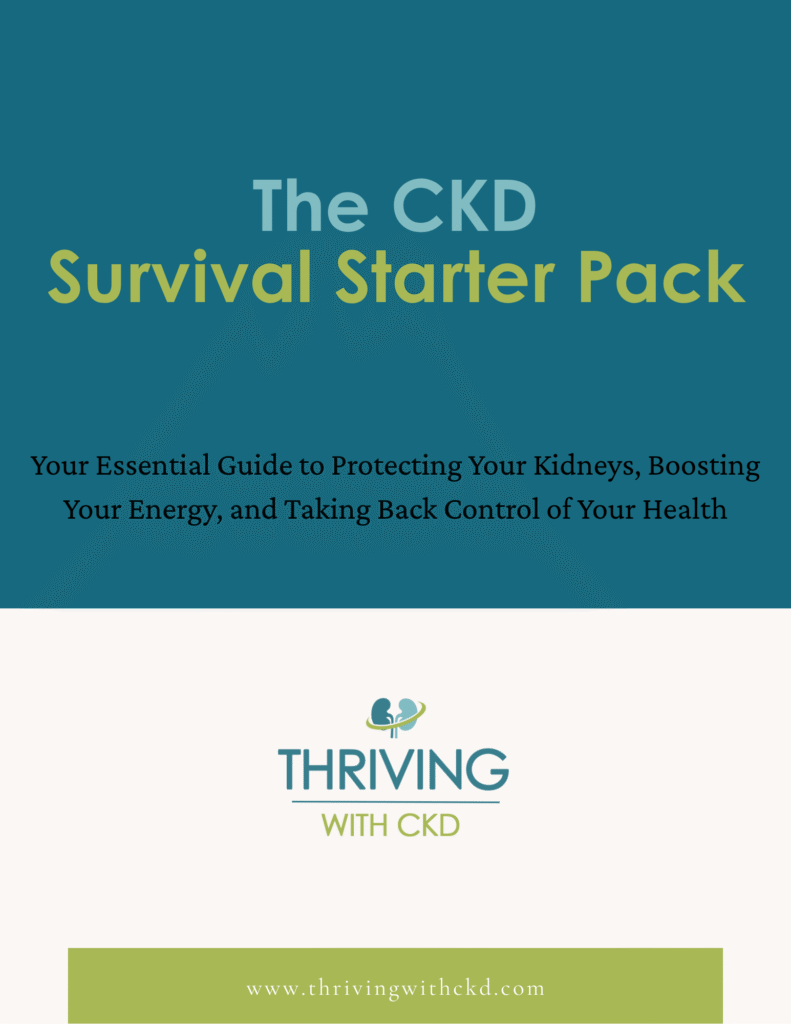
“The CKD Survival Starter Pack”
Use Code THRIVE40 at checkout for 40% off today!
📦 Inside the CKD Survival Starter Pack, you’ll get:
✅ How to Eat with CKD – A simple, kidney-friendly plate guide that helps takes the guesswork out of meals
✅ Understand & Track Your Labs – Learn what your eGFR, creatinine, uACR, potassium, and phosphorus numbers actually mean
✅ 30-Day Action Plan – Small, realistic steps that move the needle without overwhelming you
✅ 7-Day Meal Plan – Kidney-friendly, delicious meals you can actually make at home
✅ 10 CKD FAQ answers + 5 Questions to ask your Nephrologist at your next doctor visit!
✅ + More! – Bonus resources, tips, trackers and tools to help you thrive with CKD
This isn’t about perfection. It’s about giving yourself the knowledge, tools, and support to protect your kidneys and feel empowered—one step at a time.