Chronic Kidney Disease (CKD) affects millions worldwide, and managing nutrition is one of the most powerful tools to slow its progression and maintain quality of life. For those in stages 2 to 4 CKD, the kidneys are still functioning but under stress, making dietary choices critical to reduce kidney workload and manage systemic complications like high blood pressure and inflammation.
This comprehensive guide breaks down the 5 Key Pillars of Kidney Disease Nutrition based on the latest clinical guidelines and research. Whether you are newly diagnosed or have been managing CKD for years, understanding these pillars will empower you to make informed, practical choices that protect your kidneys and overall health.
Understanding Chronic Kidney Disease and Nutrition
CKD is characterized by a gradual loss of kidney function over time. The kidneys’ primary role is to filter waste, excess fluids, and minerals from the blood. As kidney function declines, waste products and minerals like potassium and phosphorus can build up, causing complications.
Nutrition plays a vital role in managing CKD because what you eat directly affects kidney workload, blood pressure, inflammation, and mineral balance. The goal is to reduce stress on the kidneys while maintaining adequate nutrition to support overall health.
Pillar 1: The Moderate Protein Shift
Why Protein Matters in CKD
Protein is essential for building and repairing tissues, but it also produces waste products like urea that the kidneys must filter. In early-stage CKD, excessive protein intake can cause hyperfiltration, where the kidneys work harder than normal, accelerating damage.
The Clinical Recommendation
For most people with stages 2-4 CKD, the recommended protein intake is about 0.6-0.8 grams per kilogram of body weight per day. This moderate intake contrasts with high-protein diets popular in fitness circles, which can be harmful for kidney health.
Plant-Based Proteins: The Kidney-Friendly Choice
Plant proteins from beans, lentils, and whole grains are preferred because they produce less metabolic acid and urea, reducing kidney stress. Additionally, plant-based diets are rich in fiber and antioxidants, which help reduce inflammation. But clean and lean animal sources like chicken or turkey breast, fish; like salmon, cod, halibut or tilapia, or eggs/egg whites can be great moderate choices. Red meat typically has more phosphorus and creates more urea or protein waste for your kidneys to filter. If you do choose to eat red meat do so in moderation and with lean sources.
Practical Tips
- Replace some animal protein with plant-based options like chickpeas, lentils, tofu, and quinoa.
- Limit red meat and processed meats, which are high in phosphorus and saturated fats.
- Work with a renal dietitian to tailor protein intake based on your labs and symptoms.
Pillar 2: Precision Sodium & Blood Pressure Control
The Link Between Sodium, Blood Pressure, and CKD
High blood pressure is both a cause and consequence of CKD. Excess sodium causes the body to retain fluid, increasing blood pressure and damaging the kidneys’ delicate filters called nephrons.
Sodium Intake Guidelines
The general recommendation for sodium intake in CKD is between 1,500 mg and 2,300 mg per day. However, most people consume far more, often unknowingly.
Hidden Sodium: The Label Detective Challenge
Sodium is hidden in many processed foods, including bread, deli meats, canned soups, and frozen meals. Reading labels and understanding sodium content is crucial. This again is why it’s important you eat home cooked, fresh, whole foods more often.
Flavor Hacks to Reduce Sodium
- Use fresh herbs, garlic, lemon juice, and vinegar instead of salt.
- Cook meals from scratch to control sodium content.
- Choose “low sodium,” “no salt added,” or “unsalted” products.
Practical Tips
- Keep a food diary to track sodium intake.
- Avoid fast food and restaurant meals high in salt.
- Use spices and citrus to enhance flavor without sodium.
Pillar 3: The Additive Awareness (Phosphorus & Potassium)
Why Phosphorus and Potassium Matter
As kidney function declines, the body struggles to eliminate excess phosphorus and potassium. High levels can cause bone disease, heart problems, and dangerous heart rhythms. Later stages of kidney disease typically have more concerns with these two minerals. Always monitor and be aware of your labs regarding phosphorus and potassium regularly.
The Hidden Danger of Additives
Phosphorus and potassium additives in processed foods are absorbed nearly 100%, much more than natural sources. These additives are common in sodas, processed meats, and packaged foods. Natural phosphorus occurring in plant based foods are absorbed much less by the body than animal sources, but chemically added phosphates are even worse for you than anything occurring naturally.
How to Identify Additives
- Scan ingredient lists for “PHOS” (phosphoric acid, disodium phosphate). Anything with PHOS in the ingredient name is no good for you or your kidneys.
- Avoid potassium chloride, often used as a salt substitute.
- Choose fresh, whole foods over processed items.
Practical Tips
- Limit dark colas and processed meats.
- Boil and leach high-potassium vegetables if advised by your dietitian.
- Regularly check your blood levels and adjust diet accordingly to your labs.
- If you have high potassium you’ll need to limit high potassium foods, but if your potassium levels are normal you have much more freedom with potassium rich foods like some vegetables and fruits.
Pillar 4: Smart Carb & Anti-Inflammatory Fueling
CKD and Inflammation
CKD is linked to chronic inflammation and often coexists with diabetes or insulin resistance. Inflammation damages blood vessels in the kidneys, accelerating decline. Refined carbs and sugars can feed inflammation which in turn creates more dysfunction for your kidneys.
The Role of Smart Carbs
Choosing high-fiber, low-glycemic carbohydrates helps stabilize blood sugar and reduce inflammation. The Mediterranean and DASH diets are excellent frameworks that commonly work in a kidney healthy diet. These two sources are easily searched online for their key principles.
Kidney-Friendly Smart Carbs
- Quinoa, barley, wild rice and whole grains
- Berries, apples, and cherries (low potassium fruits)
- Cauliflower, cabbage, and green beans (low potassium vegetables)
- Sweet potatoes can work, too, if you do not have high potassium levels in your recent labs.
Practical Tips
- Replace white bread and pasta with whole grains.
- Include colorful fruits and vegetables daily.
- Avoid refined sugars and processed snacks.
- You can eat white rice, pasta, bread, but should do so in moderation, again, depending on your labs and insulin/a1c levels.
Pillar 5: Lab-Based Individualization
Why One Size Does Not Fit All
CKD nutrition must be personalized. Your lab results for GFR, potassium, phosphorus, and other markers guide dietary adjustments.
Working with a Renal Dietitian
A renal dietitian helps interpret labs and tailor your diet to your current kidney function and health goals.
Examples of Individualization
- If potassium is normal, you may enjoy avocados and spinach in moderation.
- If phosphorus is high, limit dairy and processed foods with additives.
- Protein needs may increase if on dialysis.
Practical Tips
- Schedule regular lab tests.
- Communicate openly with your healthcare team.
- Adjust your diet as your condition changes.
Putting It All Together: A Practical Approach for the Average Kidney Patient
Managing CKD nutrition can feel overwhelming, but breaking it down into these five pillars makes it manageable:
- Moderate your protein intake and favor plant-based sources.
- Control your sodium by reading labels and using natural flavor enhancers.
- Avoid phosphorus and potassium additives by choosing fresh, whole foods.
- Fuel your body with smart carbs that reduce inflammation and stabilize blood sugar.
- Personalize your diet based on your lab results and work closely with a renal dietitian.
Sample Daily Meal Plan Framework
- Breakfast: Oatmeal with berries and a sprinkle of chia seeds.
- Lunch: Grilled chicken or tofu with a large mixed greens salad dressed with olive oil and lemon.
- Snack: Apple slices with almond butter.
- Dinner: Stir-fried cauliflower, green beans, and baked salmon with garlic and fresh herbs.
Tips for Success
- Meal prep on weekends to avoid last-minute unhealthy choices.
- Keep a food journal to track how foods affect your labs and symptoms.
- Stay hydrated but follow your doctor’s advice on fluid intake.
- Regularly review your labs and adjust your diet accordingly.
Conclusion
Nutrition is a cornerstone of managing chronic kidney disease, especially in stages 2 to 4. By focusing on these five key pillars—moderate protein, sodium control, additive awareness, smart carbs, and lab-based individualization—you can reduce kidney stress, manage complications, and improve your quality of life.
Remember, CKD nutrition is not about restriction but about making smart, sustainable choices tailored to your unique needs. Always work with your healthcare team, especially a renal dietitian, to create a plan that works for you.
Your next step: the CKD Survival Starter Pack (with a 30-day action plan)
If this article helped you understand your nutrition, you’re already ahead—because knowledge is how you advocate for yourself.
But most people still ask:
- “Okay… what do I do next?”
- “How do I track this without getting overwhelmed?”
- “How do I turn nutrition into a daily habit?”
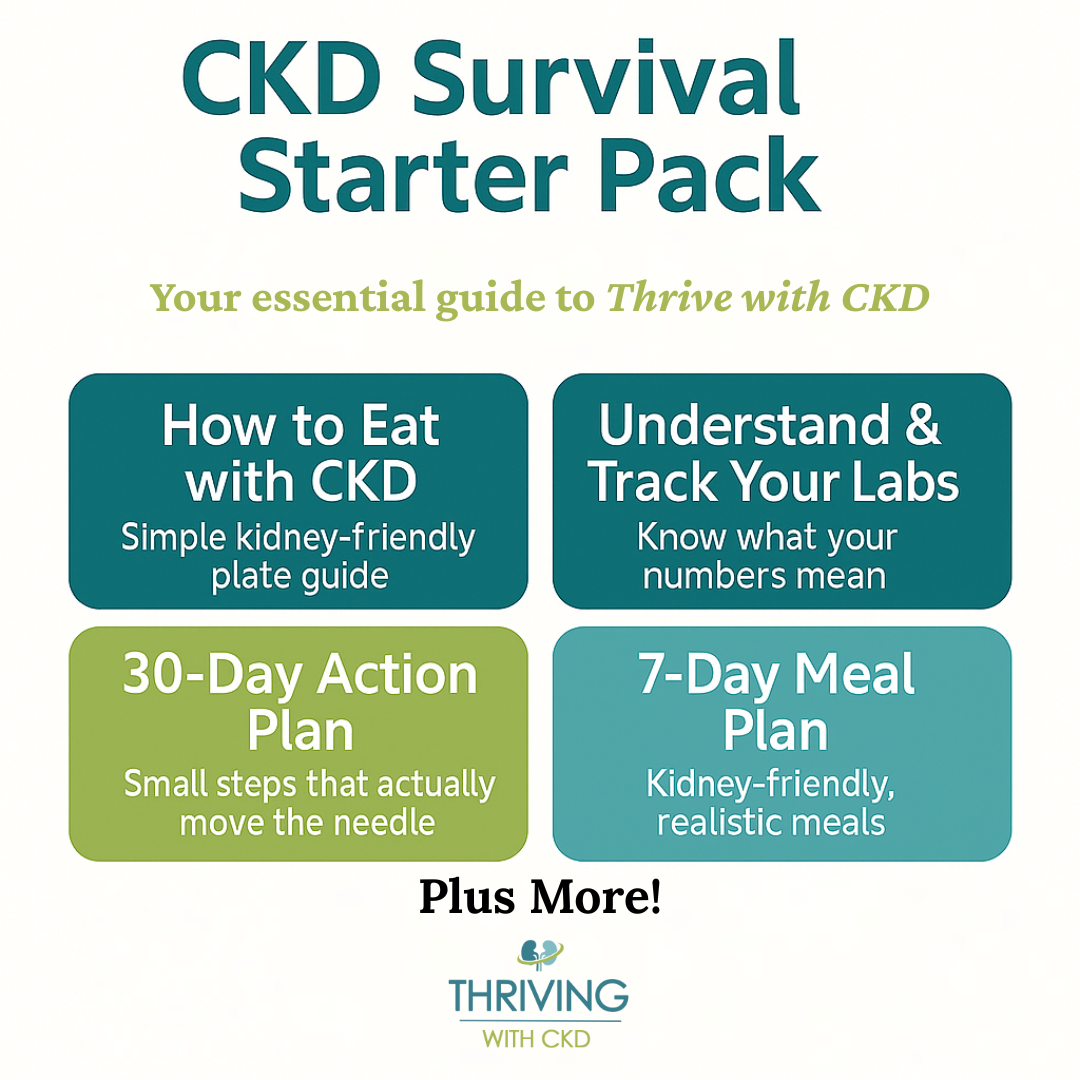
That’s exactly why I created my CKD Survival Starter Pack.
Inside, you’ll get deeper guidance on:
- Key Health, Diet. Labs & Lifestyle Info for CKD
- 30 Day Action Plan
- 7 Day Sample Meal Plan
- 7 Day Sample Workout Plan
- Fluid/Meds/Lab Tracking Kit
- Mindset & Mental Health Tips
- Daily Journal Prompt
Check out the CKD Survival Starter Pack here:
THE CKD SURVIVAL STARTER PACK
You don’t have to guess your way through kidney disease. You can understand your nutrition, track your trends, and take action—one step at a time.
Use code THRIVE40 for 40% off at checkout. (Regularly $19.99)
References
- National Kidney Foundation. Nutrition and Kidney Disease, Stages 1-5 (Not on Dialysis). https://www.kidney.org/kidney-topics/nutrition-and-kidney-disease-stages-1-5-not-dialysis
- National Institute of Diabetes and Digestive and Kidney Diseases (NIDDK). Healthy Eating for Adults with Chronic Kidney Disease. https://www.niddk.nih.gov/health-information/kidney-disease/chronic-kidney-disease-ckd/healthy-eating-adults-chronic-kidney-disease
- DaVita Kidney Care. What to Eat When You Have Stage 1 or 2 Kidney Disease. https://davita.com/diet-nutrition/articles/what-to-eat-when-you-have-stage-1-or-2-kidney-disease
- American Kidney Fund. Kidney-Friendly Eating Plan. https://www.kidneyfund.org/living-kidney-disease/healthy-eating-activity/kidney-friendly-eating-plan


