Learn how potassium works in the body, why balance matters for kidney and heart health, and which high- and low-potassium foods to watch. Includes practical tips for chronic kidney disease (CKD), label-reading, cooking methods, and a sample kidney-friendly meal plan.
Free Potassium Food Guide: What’s High/What’s Low at the End (Printable)
What Is Potassium and What Does It Do
Potassium is an essential mineral that helps nerves, muscles, and especially the heart work properly. Healthy kidneys keep potassium in balance. When kidney function declines (CKD), potassium can build up (hyperkalemia), increasing the risk of dangerous heart rhythm problems. Managing potassium doesn’t mean cutting it out completely—it means choosing the right foods, portions, and cooking methods for your lab values and stage of CKD. Work with your nephrologist and renal dietitian. Watch for hidden potassium in salt substitutes and food additives, use leaching methods for certain vegetables, and choose lower-potassium alternatives when needed.
Potassium is a vital electrolyte that:
- Helps your heart beat steadily by controlling electrical signals
- Supports normal nerve signaling and muscle contractions
- Works with sodium to regulate fluid balance and blood pressure
- Aids carbohydrate metabolism and insulin sensitivity
- Contributes to acid–base balance in the body
About 98% of potassium lives inside your cells. Even small changes in blood potassium can impact the heart and muscles. Healthy kidneys filter out extra potassium to keep levels in a safe range.
The Kidney–Potassium Connection
Your kidneys regulate potassium by:
- Filtering the blood and excreting excess potassium in urine
- Adjusting potassium excretion based on dietary intake and hormones (like aldosterone)
- Balancing potassium alongside sodium and bicarbonate to keep your pH stable
When kidney function declines:
- The kidneys may not remove potassium effectively, causing levels to rise (hyperkalemia).
- Certain medications common in CKD and heart disease can further increase potassium.
- Diet and preparation methods become crucial to maintain safe potassium levels.
The Heart Connection: Why Potassium Balance Matters for Your Heart
Potassium is central to cardiac electrical activity. Too little or too much may lead to rhythm problems:
Hyperkalemia (high potassium) may cause:
- Fatigue, muscle weakness, tingling
- Changes on an ECG (e.g., peaked T waves)
- Slow or irregular heartbeats, heart block, or in severe cases, cardiac arrest
Hypokalemia (low potassium) may cause:
- Muscle cramps, constipation, fatigue
- Palpitations or arrhythmias
- ECG changes and increased risk of digoxin toxicity (if applicable)
Because CKD and heart disease often coexist, potassium management is a joint kidney–heart priority. Keep all providers informed, and do not start/stop medications or salt substitutes without guidance.
How Much Potassium Do You Need?
General healthy adults: Often cited around 2,600–3,400 mg/day (varies by sex and guidelines). Many heart-healthy diets encourage higher potassium intake.
CKD: Your target is individualized. Depending on stage, labs, medications, and urine output, your care team may ask you to:
- Maintain, moderately limit, or restrict potassium
- Monitor labs like serum potassium, eGFR, and bicarbonate
- Adjust as conditions or medications change
Always follow the potassium goal set by your nephrologist or renal dietitian.
Common Causes of High Potassium in CKD
- Reduced kidney excretion due to declining kidney function
Medications:
- ACE inhibitors (e.g., lisinopril), ARBs (e.g., losartan)
- Potassium-sparing diuretics (e.g., spironolactone, eplerenone)
- Some beta-blockers, heparin, NSAIDs, trimethoprim, cyclosporine/tacrolimus
- Metabolic acidosis
- Uncontrolled diabetes or insulin deficiency
- High-potassium diet (including juices, smoothies, and dried fruits)
- Salt substitutes containing potassium chloride
- Hidden potassium additives in processed foods
Never change your medications without medical advice—these drugs often have important kidney and heart benefits.
Symptoms to Watch For
High potassium (hyperkalemia) possible signs:
- Weakness, fatigue, tingling or numbness
- Nausea
- Irregular or slow heartbeat, chest discomfort, lightheadedness
Low potassium (hypokalemia) possible signs:
- Muscle cramps, weakness, constipation
- Palpitations or irregular heartbeat
Urgent symptoms like chest pain, severe weakness, or fainting require immediate medical attention.
Hidden Potassium Sources: Read Labels Carefully
Salt substitutes: Many use potassium chloride instead of sodium chloride. Look for “potassium chloride,” “KCl,” or “potassium salt.”
Potassium additives: Common ingredients include potassium lactate, potassium phosphate, potassium citrate, potassium bicarbonate, potassium sorbate. These appear in:
- Processed meats and plant-based meats
- Sports drinks and electrolyte powders
- Low-sodium soups and sauces
- Bakery items, dairy substitutes, and some canned foods
Tip: If the nutrition label lists potassium in milligrams (mg), use that information to compare brands. If not, scan the ingredient list for potassium additives.
Cooking Methods That May Reduce Potassium
For certain higher-potassium vegetables (e.g., potatoes, sweet potatoes, carrots, beets, winter squash), you can reduce potassium content with the “leaching” method:
1. Peel and cut into small pieces.
2. Soak in a large volume of water for several hours (ideally 2–4+ hours), changing the water once if possible.
3. Rinse, then boil in fresh water.
4. Drain the cooking water; do not use it for soups or gravies.
Note: Leaching helps reduce potassium but doesn’t eliminate it. Portion control still matters.
High-Potassium Foods to Watch
Fruits (approximate potassium per typical serving):
- Banana (1 medium): ~420 mg
- Avocado (1/2 medium): ~480 mg
- Orange (1 medium): ~240 mg; Orange juice (1 cup): ~470 mg
- Cantaloupe (1 cup): ~430 mg
- Dried fruits (1/4 cup): e.g., raisins ~300–320 mg; prunes ~300–350 mg
- Kiwi (1 medium): ~215 mg
- Mango (1 cup): ~275 mg
- Pomegranate (1/2 cup arils): ~205 mg; juice (1/2 cup): ~260 mg
Vegetables:
- Potato, baked with skin (1 medium): ~925 mg; mashed (1 cup): ~700 mg
- Sweet potato (1 medium): ~540–700 mg
- Tomato (1 cup, raw): ~425 mg; tomato sauce (1/2 cup): ~400–550 mg
- Spinach, cooked (1/2 cup): ~420–470 mg
- Beet greens, cooked (1/2 cup): ~650–700 mg
- Winter squash (acorn/butternut, 1 cup): ~350–450 mg
- Mushrooms, cooked (1 cup): ~425–555 mg
Other foods:
- Beans/legumes (1/2 cup cooked): ~300–475 mg (varies by type)
- Nuts and seeds (1 oz): typically ~180–220 mg
- Yogurt (1 cup): ~350–575 mg (varies)
- Milk (1 cup): ~300–380 mg
- Coconut water (1 cup): ~600 mg
- Chocolate/cocoa products: variable but often notable
- Molasses (1 tbsp): ~290–300 mg
- Fruit and vegetable juices: often high
- Low-/reduced-sodium products may use potassium salts—check labels
Lower-Potassium Alternatives and Smart Swaps
Fruits (generally lower per serving):
- Apples or applesauce (1 medium/1/2 cup sauce): ~195 mg (apple), ~90 mg (1/2 cup sauce)
- Berries (1/2–1 cup): strawberries ~120–230 mg; blueberries ~55–115 mg; raspberries ~185 mg
- Grapes (1 cup): ~285 mg
- Pineapple (1/2 cup): ~90 mg
- Peaches/pears (1 small or 1/2 cup canned, drained): ~135–165 mg
- Watermelon (1 cup): ~170 mg
- Clementine/tangerine (1 small): ~130–160 mg
Vegetables:
- Cabbage (1 cup, cooked): ~150–180 mg
- Cauliflower (1 cup, cooked): ~175–200 mg
- Green beans (1/2 cup, cooked): ~90–110 mg
- Lettuce (1 cup): ~80–100 mg
- Cucumber (1/2 cup): ~75 mg
- Bell peppers (1/2 cup, raw): ~90–100 mg
- Zucchini/yellow squash (1/2 cup, cooked): ~120–150 mg
- Onions (1/2 cup, cooked): ~115–130 mg
Grains and starches:
- White rice, pasta, tortillas, bread (watch sodium): generally lower potassium per serving
- Rice cereal, cornflakes: typically low
- Avoid potassium-fortified products if you’re restricting potassium
Protein:
- Egg whites: ~55 mg per 2 large egg whites
- Chicken/turkey/fish (3 oz cooked): ~250–400 mg—count toward daily totals
- Tofu/plant proteins vary; check labels and portions
Dairy and alternatives:
- Rice milk (unfortified): lower potassium option
- Almond milk (varies by brand; some are lower than dairy)
- Check labels for potassium fortification in plant milks and yogurts
Practical Potassium Management Tips
- Get your labs checked regularly. Adjust diet to the goal your provider sets.
- Spread potassium throughout the day. Avoid very large portions in a single meal.
- Use leaching for starchy vegetables like potatoes. Boiling generally lowers potassium more than baking or roasting.
- Drain and rinse canned beans and vegetables to reduce potassium (and sodium).
- Choose lower-potassium fruits and vegetables more often; keep high-potassium items to small portions or replace with alternatives.
- Watch beverages: smoothies, juices, coconut water, and sports drinks can be high.
- Avoid salt substitutes with potassium chloride unless your clinician approves.
- Read ingredient lists for potassium additives.
- Coordinate with medications. Some drugs raise potassium. Never stop a medication without guidance.
- Consider working with a renal dietitian for a personalized meal plan.
Sample 1-Day Kidney-Friendly (Lower-Potassium) Meal Plan
Always adapt based on your prescribed potassium target, sodium limits, phosphorus control, protein goals, diabetes needs, and personal preferences.
Breakfast
- Egg white scramble with onions, bell peppers, and a small portion of mushrooms
- White toast with unsalted butter or olive oil
- Fresh strawberries (1/2–1 cup)
- Unsweetened rice milk (unfortified), tea, or coffee
Snack
- Unsalted rice cakes with a thin layer of cream cheese or hummus (check potassium) and sliced cucumber
Lunch
- Grilled chicken salad: lettuce, cabbage, cucumbers, carrots, and bell peppers with olive oil + vinegar dressing (no salt substitute)
- White roll or small portion of white rice
- Apple
Snack
- Blueberries (1/2–1 cup) and a small handful of unsalted pretzels
Dinner
- Baked white fish with lemon and herbs (no salt substitute)
- White rice or pasta
- Steamed green beans and cauliflower
- Pineapple chunks (1/2 cup)
Hydration
- Water or flavored water without potassium additives (check labels)
Frequently Asked Questions
Is all potassium bad if I have CKD?
- No. Potassium is essential. The goal is balance—not elimination—based on your labs, CKD stage, and medications.
Are bananas the only problem?
- Many foods are high in potassium (e.g., potatoes, tomatoes, beans, avocado). Total intake, frequency, and portion sizes matter.
Are salt substitutes safe for CKD?
- Many contain potassium chloride and can raise potassium. Only use if your provider agrees.
Can cooking reduce potassium?
- Yes, especially boiling and the leaching technique for certain starchy vegetables. It helps but doesn’t make high-potassium foods “free.”
What about plant-based diets?
- Plant-forward eating can benefit heart and kidney health but often increases potassium. Careful selection, portion control, cooking methods, and guidance from a renal dietitian can make it work for many people.
What are signs of dangerous potassium levels?
- Severe muscle weakness, palpitations, chest pain, or fainting. Seek urgent care for severe symptoms.
Working With Your Care Team
- Nephrologist: monitors kidney function, medications, and lab targets.
- Cardiologist/primary care: coordinates heart health and medication choices.
- Renal dietitian: personalizes potassium, protein, sodium, and phosphorus targets; provides food swaps, recipes, and shopping strategies.
- Bring a list of typical foods and portions to your visit. Ask how your latest serum potassium and eGFR translate into dietary targets.
Key Takeaways
- Potassium is critical for nerves, muscles, and heart rhythm.
- Kidneys keep potassium balanced; CKD increases risk for hyperkalemia.
- Medications, salt substitutes, and hidden additives affect potassium.
- Choose lower-potassium foods, manage portions, and use leaching/boiling when helpful.
- Align your plan with lab results and professional guidance.
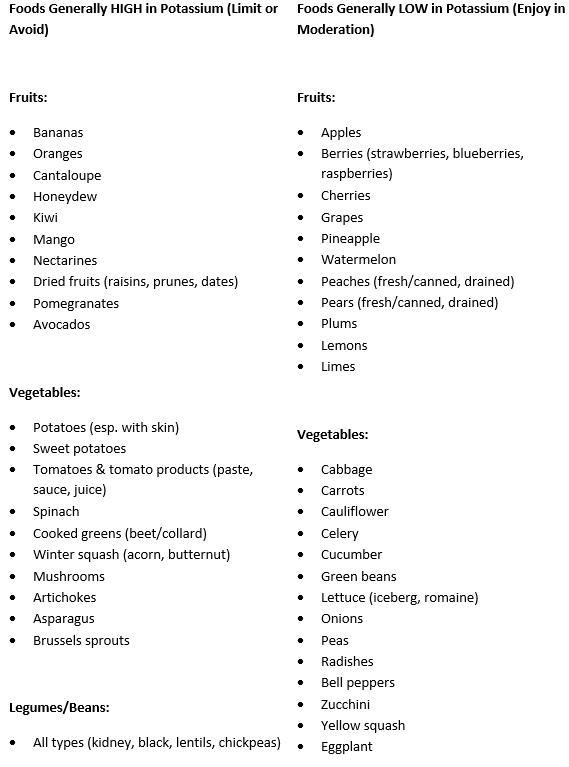
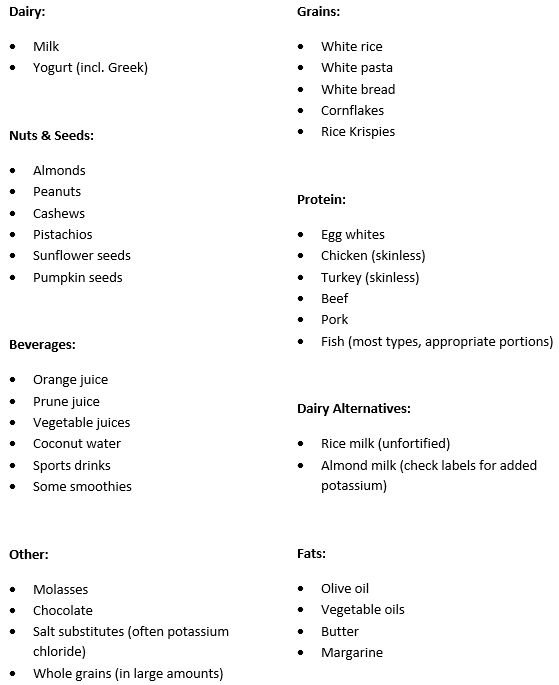
Potassium Guide for Kidney Health: High vs. Low Foods
Potassium is a vital mineral, but when you have kidney disease, too much can be harmful. This guide helps you identify foods that are typically high or low in potassium. Always consult with your doctor or a renal dietitian for personalized advice based on your specific kidney condition and lab results.
Important Note: Serving sizes significantly impact potassium intake. Even “low” potassium foods can become “high” if consumed in large quantities. “High” potassium foods can sometimes be enjoyed in small, controlled portions or with special preparation methods (like leaching for potatoes). Always follow your healthcare provider’s recommendations.

Tips for Managing Potassium
- Read labels: look for “potassium chloride” or other potassium additives in processed foods and salt substitutes.
- Portion control: even low-potassium foods can add up if you eat too much.
- Leaching: for high-potassium vegetables like potatoes, peel, cut small, soak for several hours, then boil in fresh water and drain.
- Drain & rinse: for canned fruits/vegetables, drain the liquid and rinse thoroughly.
- Cook fresh when possible: fresh foods often allow better potassium control than processed ones.
Disclaimer
This article is for general education. It is not medical advice. Always follow the plan and potassium targets provided by your nephrologist and renal dietitian, and discuss any diet or medication changes with your care team.
Alwyas review and follow the potassium targets provided by your nephrologist and renal dietitian, and discuss any diet or medication changes with your care team.
References
- National Kidney Foundation. Potassium and Your CKD Diet. [URL]
- Academy of Nutrition and Dietetics. Potassium and Chronic Kidney Disease. [URL]
- National Institutes of Health, Office of Dietary Supplements. Potassium Fact Sheet for Health Professionals. [URL]/
- Centers for Disease Control and Prevention (CDC). Chronic Kidney Disease Initiative: Nutrition for CKD. [URL]
- Mayo Clinic. Hyperkalemia (High Potassium). [URL]
- National Kidney Foundation. Nutrition and Chronic Kidney Disease. [URL]


