Baked Lemon-Dill Salmon with Cauliflower Mash & Roasted Green Beans
Description
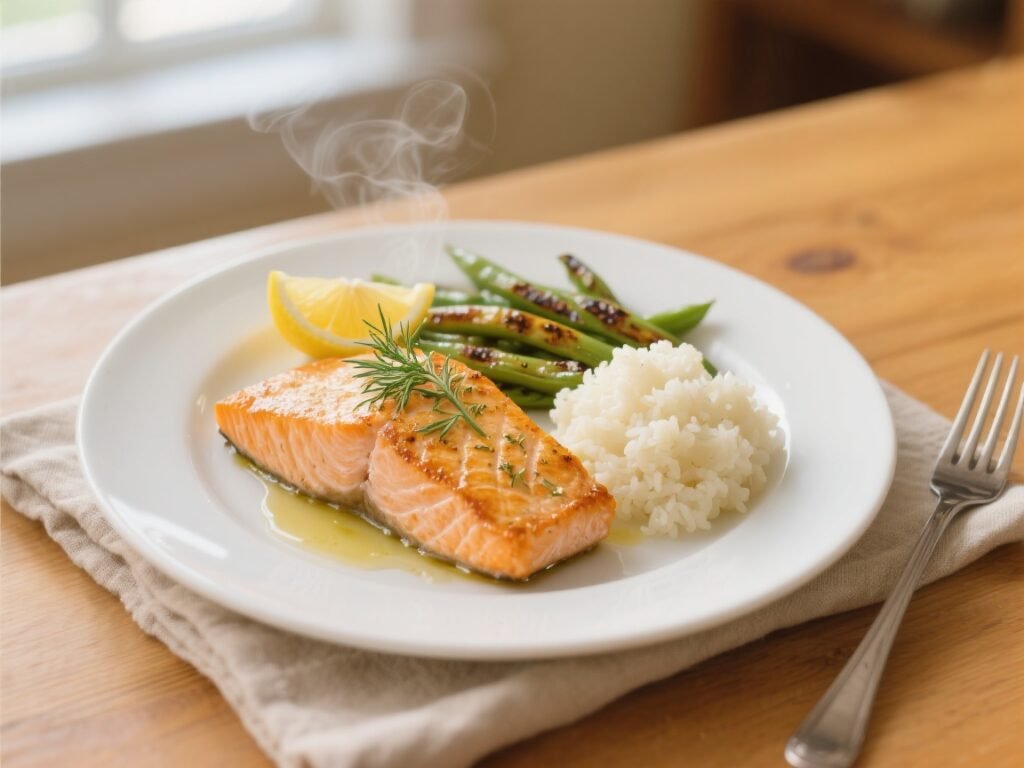
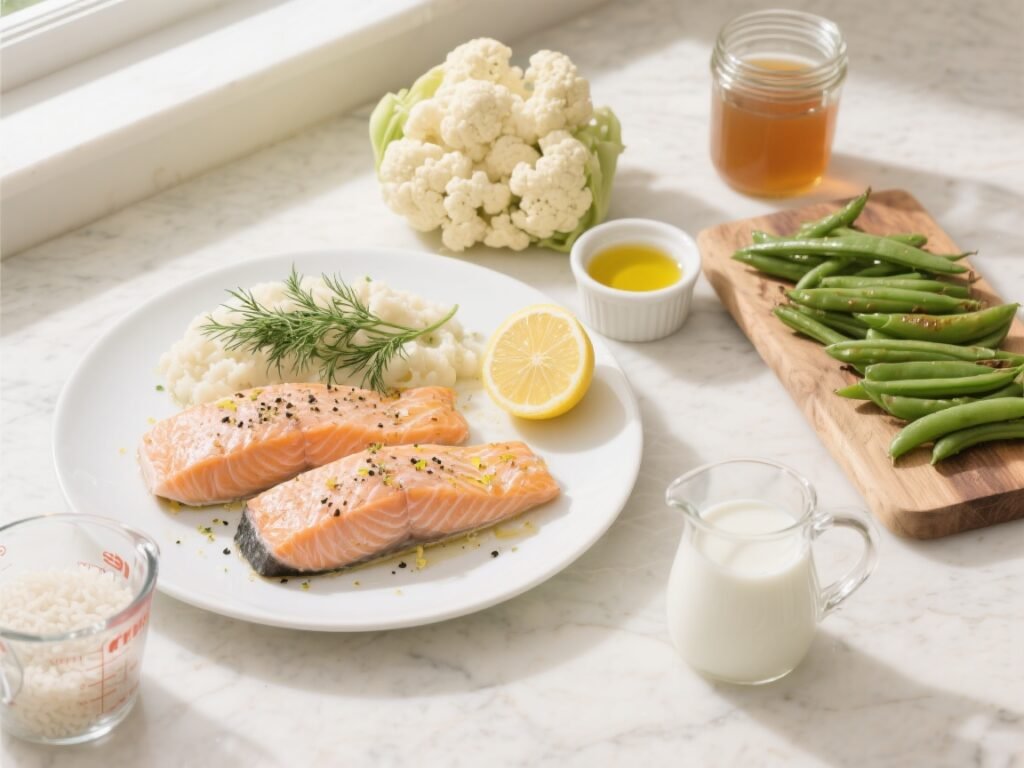
Tender baked salmon fillets seasoned with lemon, fresh dill, and black pepper, served alongside a smooth cauliflower mash (made with a splash of plant milk and olive oil) and crisp roasted green beans. Comforting, flavorful, and kept low in sodium, phosphorus, and potassium through portion control and kidney-friendly ingredient choices.
Ingredients
Instructions
-
Preheat oven to 400°F (204°C).
-
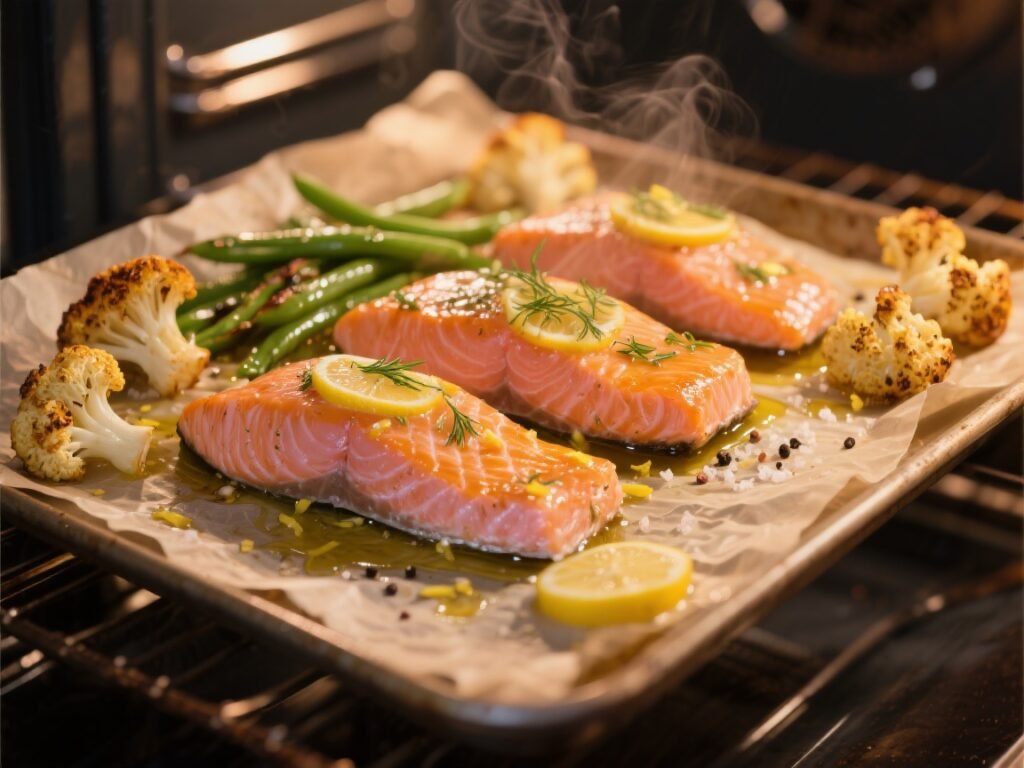
Prep cauliflower: toss florets with 2 tsp olive oil and spread on a baking sheet. Place in oven and roast 20–25 minutes until tender and lightly golden. (If you prefer steaming, steam until fork-tender.)
-
While cauliflower roasts, toss green beans with 1 tbsp olive oil, minced garlic, and black pepper. Spread on a second baking sheet. Put green beans in oven alongside cauliflower for the last 12–15 minutes of cauliflower roasting (they’ll roast until tender-crisp).
-
Cook rice (if using): rinse rice, then bring water to a boil, add rice, reduce to simmer, cover and cook per package directions (usually ~15–18 minutes). Keep warm.
-
Prepare salmon: while vegetables roast, pat salmon fillets dry. In a small bowl mix 1 tbsp olive oil, lemon zest, lemon juice (reserve ½ tbsp for mash), chopped dill/parsley, 1 clove minced garlic, and black pepper. Brush or spoon over fillets.
-
Bake salmon: place fillets skin-side down on a lined baking sheet or small baking dish. Bake at 400°F for 10–12 minutes (depending on thickness) until salmon flakes easily and internal temp reaches 145°F (or just cooked through).
-
Finish cauliflower mash: when cauliflower is tender, transfer to a bowl or food processor. Add 1–2 tbsp plant milk, 2 tsp olive oil, ½ tbsp lemon juice (optional), and black pepper. Mash or purée until smooth but not overly thin. Taste and adjust.
-
Plate: place 3–4 oz (cooked weight) salmon on each plate with ~1/2 cup cooked rice (optional), a generous scoop (about 3/4 cup) cauliflower mash, and ~1 cup roasted green beans. Garnish salmon with extra dill and a lemon wedge.
Nutrition Facts
- Amount Per Serving
- Calories 345kcal
- % Daily Value *
- Total Fat 14g22%
- Saturated Fat 2.5g13%
- Trans Fat 0g
- Cholesterol 55mg19%
- Sodium 115mg5%
- Potassium 600mg18%
- Total Carbohydrate 36g12%
- Dietary Fiber 5g20%
- Sugars 5g
- Protein 24g48%
- Phosphorus 320 mg
* Percent Daily Values are based on a 2,000 calorie diet. Your daily value may be higher or lower depending on your calorie needs.
Note
Why This Is Kidney Friendly:
- Uses measured portions of lean fish (single-serving sized fillets) to deliver high-quality protein without excessive portion sizes.
- Flavoring relies on fresh lemon, herbs, and garlic instead of added salt or high-sodium sauces.
- Cauliflower mash replaces potatoes to reduce potassium load; plant milk and olive oil keep phosphorus and saturated fat low.
- Roasted green beans provide fiber and crunch with modest potassium compared with higher-potassium vegetables.
- Overall meal is heart-healthy (olive oil, minimal saturated fat) and designed for portion control — always confirm portion/protein targets with your renal dietitian.
Notes on nutrition:
- These are rough estimates for a single plate with ~3 oz cooked salmon, 1/2 cup cooked white rice, ~3/4 cup cauliflower mash, and ~1 cup roasted green beans. Salmon contributes most of the phosphorus and potassium — adjust the fish portion according to your renal dietitian’s guidance.
- If you need lower phosphorus/potassium, reduce salmon portion to 2–3 oz or substitute a lower-potassium white fish (e.g., tilapia) and reduce or omit the rice.
Tips & Variations
- Protein tailoring: If your dietician recommends less protein, reduce salmon to 2–3 oz per serving or split a larger fillet across more plates and bulk up veggies.
- Lower-potassium swap: If you’re on a strict low-potassium plan, swap green beans for lower-potassium veggies such as iceberg lettuce salad or small servings of cucumber.
- Dairy swap: Use plant milk (rice or almond) to keep phosphorus lower than regular dairy.
- Flavor ideas: Add a teaspoon of capers on the salmon for briny flavor (note: check sodium) or a pinch of smoked paprika for warmth.
- Make-ahead: Roast cauliflower and green beans up to 2 days ahead; rewarm and finish salmon fresh. Cauliflower mash freezes well in small portions.
baked salmon recipe, kidney friendly dinner, low sodium seafood, low phosphorus meal, CKD dinner, cauliflower mash, roasted green beans, heart healthy fish
